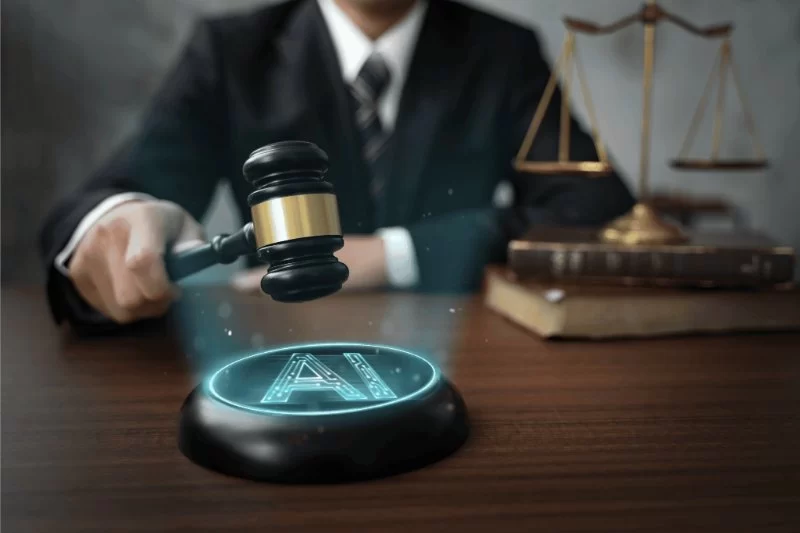
- understanding-legal-implications-of-ai
- intellectual-property-and-ai
- liability-and-responsibility-for-ai-decisions
- data-privacy-and-ai
- real-world-ai-legal-case
- emerging-regulations-on-ai
- how-to-navigate-legal-risks-with-ai
1. Understanding the Legal Implications of AI
Artificial Intelligence (AI) is rapidly transforming industries, but with its rise comes a host of legal concerns. As AI becomes more embedded in business practices, understanding the legal implications of AI use is essential for navigating its complex landscape.
1.1 The Intersection of Technology and Law
AI’s application in areas such as healthcare, finance, and autonomous vehicles has opened up numerous opportunities. However, these innovations raise critical questions about accountability, transparency, and privacy.
Key questions include
1. Who is liable when AI makes errors?
2. How should intellectual property created by AI be protected?
3. What regulatory frameworks are needed for AI development and deployment?
1.2 The Growing Need for Legal Clarity
As AI continues to evolve, businesses must stay informed on the latest legal developments to ensure compliance with current laws and mitigate potential risks. Lawmakers are catching up, but businesses must remain proactive in understanding their obligations.
2. Intellectual Property and AI
One of the most significant legal implications of AI use lies in intellectual property (IP). With AI systems capable of creating art, music, and even inventions, the question of who owns the output is becoming increasingly complex.
2.1 AI as a Creator
AI systems that generate creative works or inventions may challenge existing IP laws, which typically recognize only human creators.
Key considerations
1. Who owns the rights to AI-generated works?
2. Should AI be recognized as an inventor or creator under the law?
3. How can businesses protect AI-created innovations?
2.2 The Role of AI in Patent Law
AI’s ability to innovate presents new challenges for patent laws, especially when it comes to identifying the true inventor. Some countries are already addressing these concerns by adjusting patent frameworks to account for AI involvement.
3. Liability and Responsibility for AI Decisions
One of the critical legal questions surrounding AI use is determining liability in case of harm or errors caused by AI decisions. In industries like autonomous driving or healthcare, where AI makes real-time decisions, the stakes are particularly high.
3.1 Who Is Responsible for AI’s Actions?
If an autonomous vehicle causes an accident, or if AI in healthcare provides incorrect medical advice, who is held accountable? Should the AI developer, the user, or the AI system itself be liable?
Possible scenarios include
1. AI errors resulting in harm to individuals or property
2. Breaches of contract due to AI decisions
3. Regulatory violations caused by AI systems
3.2 Legal Frameworks for AI Liability
To address these concerns, some countries are exploring or implementing new legal frameworks that focus on AI liability and responsibility. These laws aim to ensure that accountability is clear when AI systems are involved in making decisions that impact people’s lives.
4. Data Privacy and AI
AI systems rely heavily on large datasets, which can include personal and sensitive information. This creates significant data privacy concerns, especially in light of stricter regulations like the General Data Protection Regulation (GDPR) in the European Union.
4.1 The Risks of Data Collection
AI systems often require vast amounts of data to train algorithms. This can include sensitive personal information, leading to risks such as data breaches, unauthorized access, and misuse.
Key privacy concerns
1. Informed consent for data collection
2. Transparency in how data is used by AI systems
3. The potential for discrimination or bias in AI models due to biased data
4.2 Navigating Data Protection Laws
AI developers and users must ensure compliance with data protection laws, including the GDPR and CCPA, which regulate how personal data is collected, stored, and used. Failing to do so could result in hefty fines and damage to a company’s reputation.
5. Real-World AI Legal Case
A well-known legal case involved a major AI company that faced a lawsuit after one of its machine learning algorithms inadvertently caused biased hiring decisions. The case highlighted the need for clearer regulations on AI ethics and accountability in decision-making.
5.1 The Outcome
The company was required to modify its algorithms and enhance transparency in its hiring practices. This case set a precedent for how companies should approach ethical AI use, particularly when dealing with personal data and decisions affecting people's lives.
Key lessons
1. Bias in AI can lead to legal and reputational damage
2. Transparency and accountability are critical for AI developers
3. Clear ethical guidelines are necessary to ensure fairness in AI systems
6. Emerging Regulations on AI
Governments around the world are beginning to implement regulations that directly address AI use, aiming to ensure its responsible development and application.
6.1 The European Union’s AI Act
The EU has proposed the AI Act, one of the world’s first comprehensive regulatory frameworks for artificial intelligence. This act categorizes AI systems based on their risk levels, imposing stricter regulations on high-risk applications like facial recognition and healthcare AI.
6.2 The U.S. Approach to AI Regulation
In the U.S., AI regulation has been more fragmented. However, the Biden administration has focused on developing a national AI strategy, emphasizing transparency, accountability, and innovation while protecting public interest.
6.3 The Future of AI Legal Standards
As AI technology continues to evolve, regulatory frameworks will need to keep pace. The challenge lies in balancing innovation with ethical considerations, ensuring that AI serves society without causing harm or discrimination.
7. How to Navigate Legal Risks with AI
7.1 Stay Informed on Legal Developments
As AI regulations evolve, it is essential for businesses to stay informed about new laws and guidelines to mitigate risks effectively.
7.2 Implement Ethical AI Practices
Businesses should develop and implement ethical AI guidelines that prioritize fairness, transparency, and accountability.
7.3 Work with Legal Experts
Engaging with legal professionals who specialize in AI law, like those at ESPLawyers, can help ensure that AI implementations comply with current regulations and ethical standards.
AI presents transformative opportunities, but it also brings significant legal challenges. Understanding the legal implications of AI use helps businesses navigate these challenges, ensuring responsible development and use of AI technologies.